Post-Acquisition Marketing: The First 90 Days of MarTech Value Creation
The first 90 days after an acquisition are about control, not optimization. This guide shows how PE firms can stabilize MarTech, reduce risk, and establish trusted performance baselines that support long-term value creation.


When a Private Equity firm acquires a new portfolio company, the marketing stack is rarely the headline priority during due diligence, but it is often the fastest lever to reduce risk and accelerate value creation post-close.
In the high-stakes environment of the first 100 days, the goal is not immediate, aggressive optimization or wholesale platform replacement. The goal is control.
At Haptiq, we have overseen dozens of transitions. We find that successful transitions prioritize gaining control of the assets, establishing trust in the data, and creating a marketing operating baseline that supports the investment thesis.
This guide outlines the framework experienced operators use to stabilize marketing infrastructure in the first quarter of ownership.
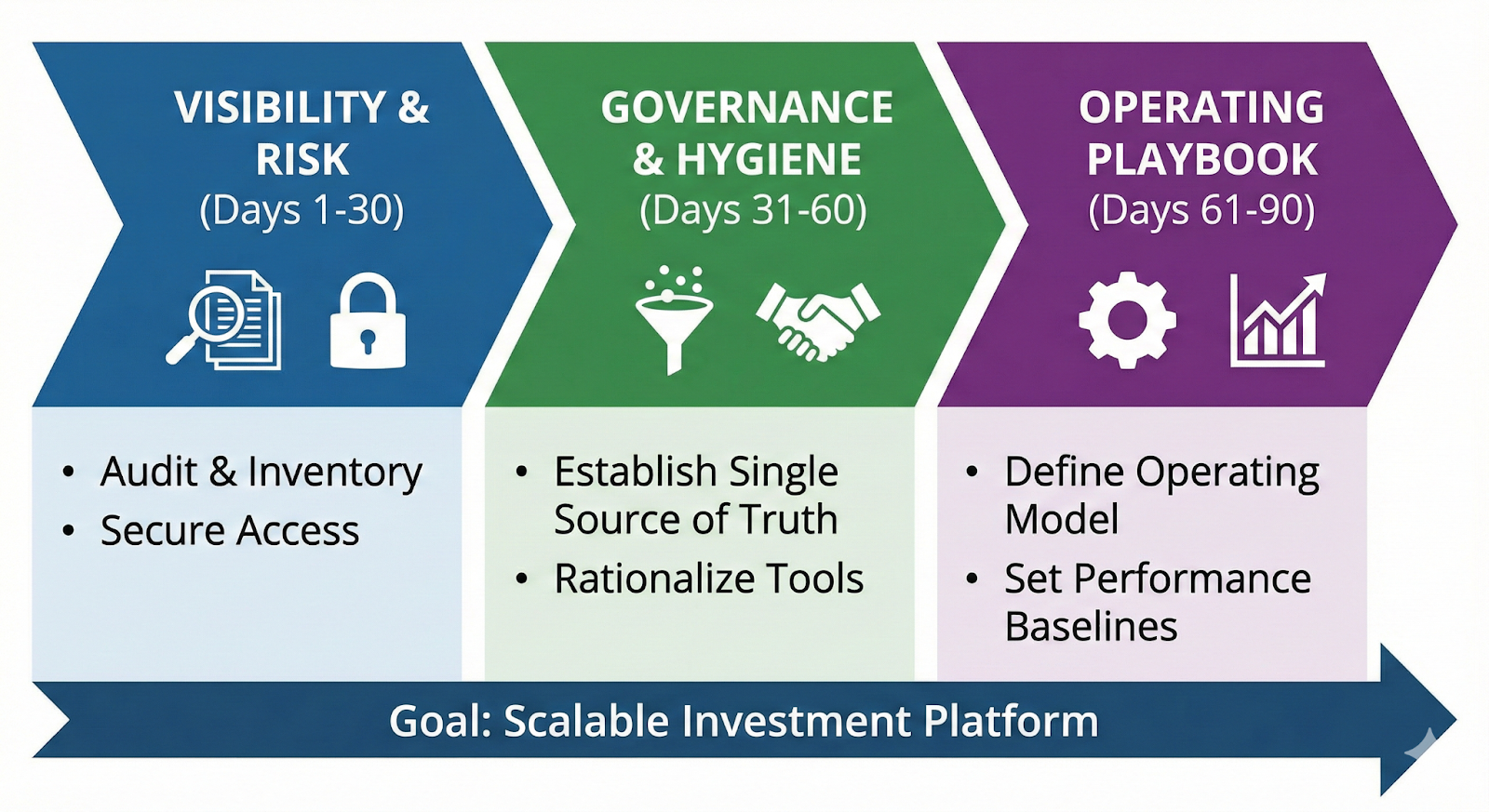
Why the First 90 Days Determine Long-Term Value
Marketing technology sits at the intersection of revenue generation, customer data, and executive reporting. In many newly acquired businesses, especially founder-led organizations, the stack has evolved organically. It often reflects years of tactical band-aids rather than intentional design.
Common risks we identify during this phase include:
- "Shadow IT": Multiple tools performing overlapping functions with no central oversight.
- Data Silos: Inconsistent tracking that breaks attribution models.
- Key Person Risk: Heavy reliance on specific agencies or individual contributors who hold the "keys to the castle."
The first 90 days are about reducing this uncertainty. The objective is to make the marketing engine understandable, governable, and reliable.
Days 1–30: Visibility, Access, and Risk Mitigation
Establishing a "Radical Transparency" Inventory
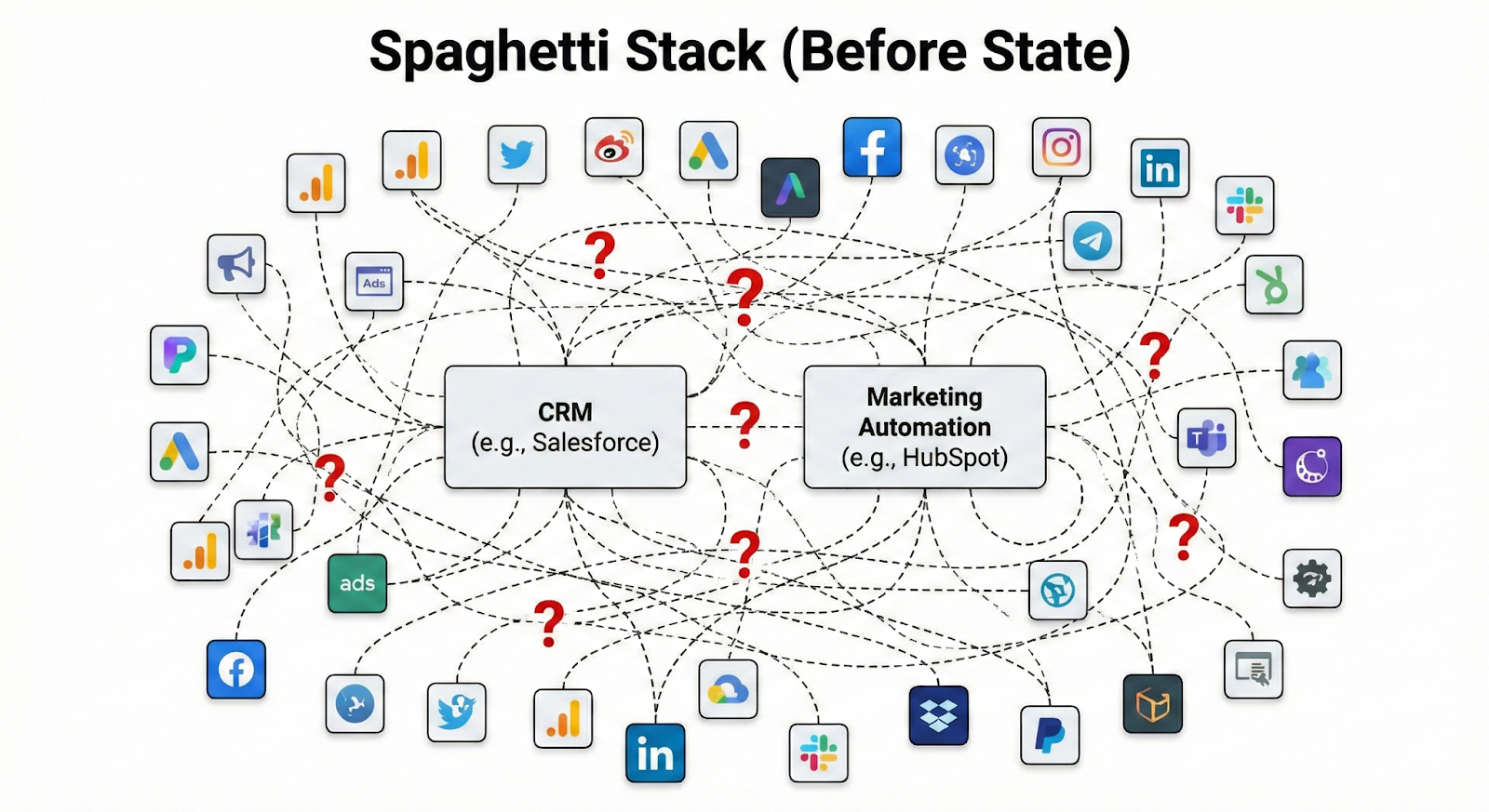
The initial phase focuses strictly on understanding how demand, data, and reporting flow through the organization. We often find that no single person in the acquired company fully understands the end-to-end system.
Your first step is a comprehensive MarTech Audit. This inventory must cover:
- Analytics, CRM, Automation, CMS, and Ad Platforms.
- Documentation of hidden integrations (Zaps, APIs, webhooks).
- Identification of where data is transformed, duplicated, or lost.
Industry Context: Common Friction Points
Different investment verticals present unique data challenges. Here is what we typically see:

Securing Access and Reducing Dependency
Gaining administrative access to all marketing systems is a foundational governance step. Without it, meaningful change is impossible.
Early priorities include centralizing platform ownership (moving away from personal Gmail accounts to corporate credentials) and identifying where external agencies control critical infrastructure. This phase is less about optimization and more about operational resilience.
Days 31–60: Data Hygiene and Governance
Establishing the "Single Source of Truth"
Once visibility is established, attention turns to data quality. If the Board cannot trust the numbers, the marketing team cannot justify the budget.
This challenge mirrors what happens at the operational level in post-merger integrations, where inconsistent definitions and fragmented systems delay KPI comparability until harmonization is enforced through execution.
Experienced operators use this month to align definitions around:
- Lifecycle Stages: What constitutes a Lead, MQL, SQL, and Opportunity?
- CAC Calculations: Are we including all relevant costs?
- Attribution: Which Data Governance Solution are we using to track the customer journey?
In many cases, relatively small fixes in data normalization significantly improve confidence in performance reporting.
Reviewing Consent and Compliance
Changes in ownership often trigger a closer look at compliance. This is the time to audit consent management platforms (CMP) and ensure analytics tools respect user permissions. Addressing these issues early reduces downstream regulatory risk without disrupting reporting later in the hold period.
Rationalizing the Stack
Rather than ripping and replacing systems immediately, focus on simplification. Identify redundant tools and reduce fragile integrations. The objective is a stack that is easier to maintain, explain, and scale.
Days 61–90: The Scalable Operating Playbook
Defining the Operating Model
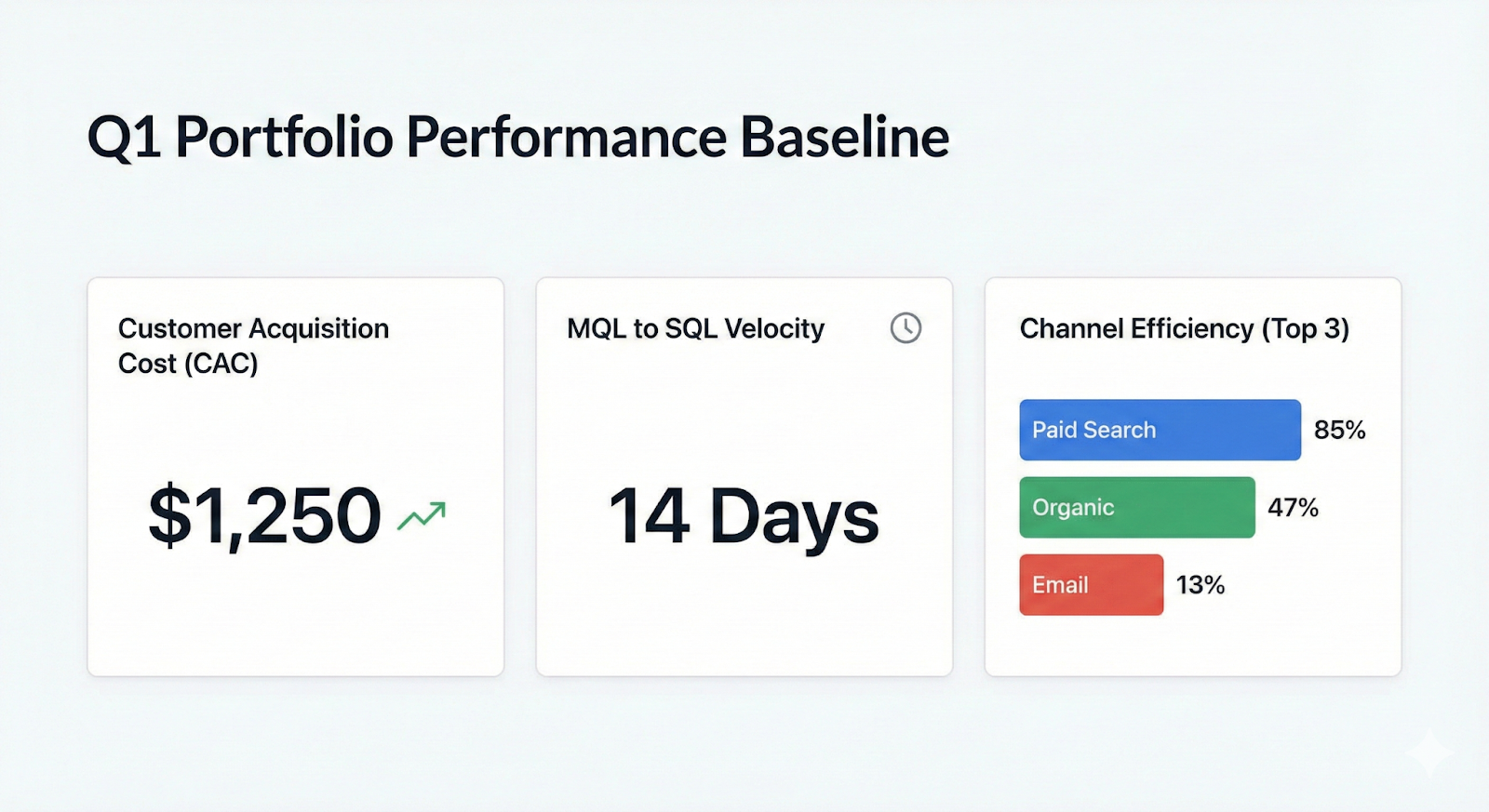
By the third month, the emphasis shifts from diagnosis to structure. To prepare for the next phase of growth, you must clarify:
- Standardization: What is fixed across the portfolio vs. customized for this asset?
- Ownership: What do internal teams own vs. external partners?
- Change Management: How are new tools requested, tested, and deployed?
Establishing Performance Baselines
With cleaner data and aligned definitions, you can finally establish credible baselines for channel efficiency, funnel conversion rates, and lead velocity.
These baselines provide a factual starting point for future optimization, moving the organization away from decision-making based on anecdote or intuition.
What a Successful Transition Looks Like
A well-executed marketing stack transition is often unremarkable on the surface, but transformative structurally:
- Leadership trusts the numbers.
- Teams understand the system architecture.
- Operational risk is minimized.
While these outcomes may not be visible externally, they meaningfully improve the organization’s ability to execute on the investment thesis.
Need to Secure a Recent Acquisition?
The first 90 days are about creating clarity, not just acceleration. When marketing infrastructure is stabilized early, future initiatives become easier to execute and govern.
Haptiq partners with Private Equity firms and Portfolio leadership to rapidly stabilize, audit, and optimize marketing infrastructure.
- Audit your current stack: View our Tech Audit Services
- Discuss your roadmap: Schedule a Briefing with a Haptiq Strategist








.png)


.png)


.png)
.png)









.png)




.png)



.png)
.png)

.svg)
.png)


.png)
.png)
.png)



.png)











.png)










.png)







.png)