Beyond the Data: Why Enterprises Are Moving Towards AI-Native Operations
Enterprises are sitting on more data than ever before — but data or even insights alone don’t create value. The real advantage comes when organizations can transform that data into decisions fast enough to shape outcomes that help them outperform. Over the last few years, data warehouses and lakehouses have helped companies bring order to the chaos of fragmented data systems, and some have built meaningful insight engines. But as AI moves to the center of business operations, a new question is emerging: are our data and operations ready to compete in the AI native world?

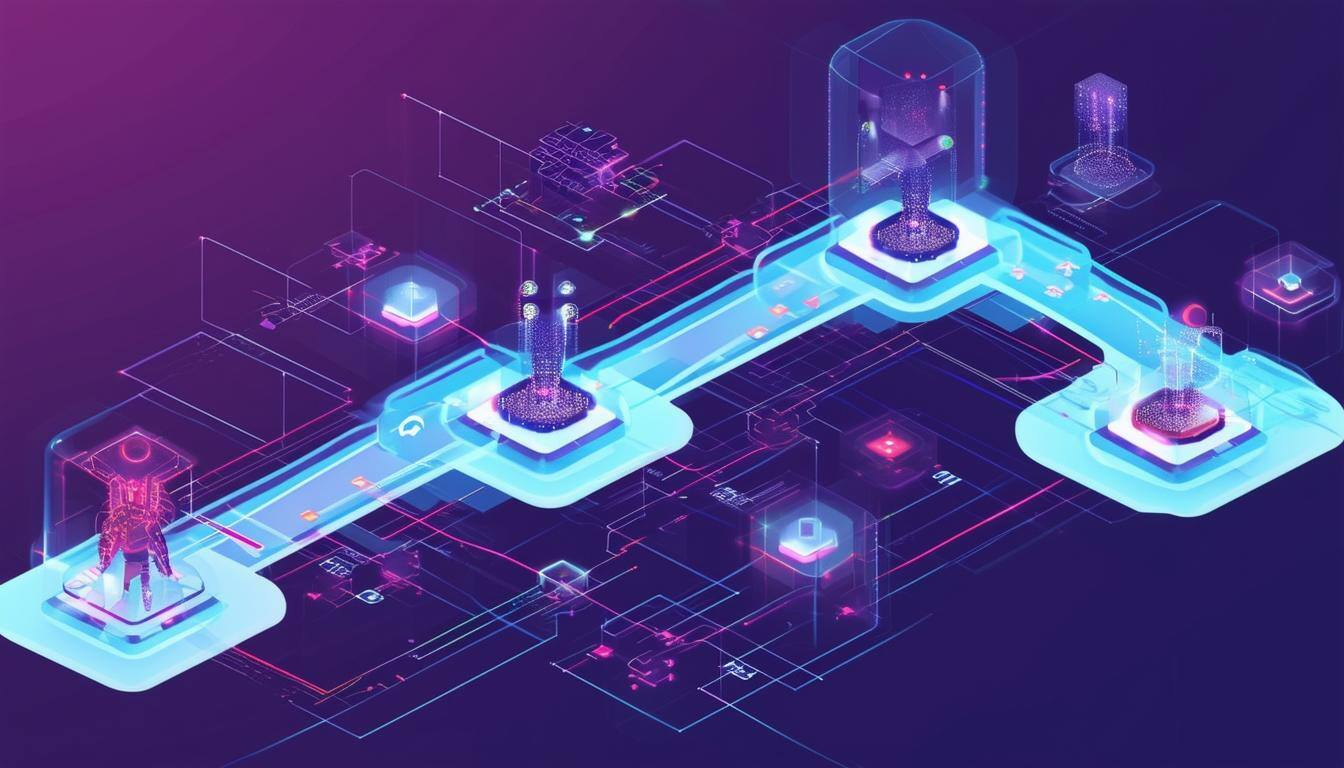
The Lakehouse Was a Breakthrough, But Not Enough
The value of data warehouses a decade ago and the lakehouse architecture more recently was undeniable. It brought structure to unstructured data, allowed enterprises to run analytics and ML algorithms at scale, and imposed governance on messy pipelines.
Yet the challenges enterprises are facing today go far beyond what these data-first architectures can tackle. It begs the inevitable question: Can your technology stack handle the growing complexity of integrating not just data, but also machine learing models, orchestration frameworks, and real-time business applications? And perhaps most importantly, how should organizations measure cost, not just in terms of storage and compute, but in terms of engineering time, integration overhead, as well as time to value?
For many companies, getting all their data in one place and being able to run analytics on it, served as the ultimate finish line for them. But for the companies that will outperform, it was an important milestone on the way to something more ambitious.
From Data Consolidation to Real-Time Intelligence to AI-Enabled Operations
As AI becomes central to enterprise operations, the real question has shifted. It’s no longer just “Where should our data live?” but “How do we use our data to take actions with minimal human intervention?” That requires a new kind of platform, one that does more than unify data. Think of it as an AI-native operations layer, an environment where data, machine learning models, and operational applications aren’t bolted together as separate pieces, but are designed to work as a whole.
Such platforms make decentralized real-time decisioning possible because your data, models, applications, and workflows are tied together using agentic AI. Systems can talk to each other with minimal human intervention, not just to do repetitive tasks but to take the best action with the awareness of your company's data, systems, policies, procedures, and defined values (even tone). This new approach of looking at your operations balances openness with pragmatism, integrating with the systems enterprises already use while offering a clear path forward if requirements change. The value of implementing such platforms should be measured not only on infrastructure bills, total cost of ownership, engineering hours saved, and the speed of deployment. It should first and foremost be measured against the business outcomes delivered.
Industry Leaders Are Defining What’s Next
We don’t have to imagine this shift - it’s already visible in different industries. In finance, fraud detection systems are being redesigned to spot suspicious activity in real time, combining transaction data, risk models, and decision engines in a seamless loop.
In healthcare, AI-assisted diagnostics are beginning to influence patient care, requiring secure integration between medical records, ML models, and clinical workflows. Manufacturing companies are deploying predictive maintenance at scale, fusing IoT sensor data with models that forecast failures before they happen. Whereas in retail, recommendation engines and dynamic pricing are moving closer to the point of interaction, reshaping the customer experience.
In each of these cases, the need is the same: platforms that don’t just consolidate data but operationalize intelligence across the enterprise and their customers. This presents a monumental shift from knowing what’s happening to dynamically shaping what happens next.
We at Haptiq are honored to be working with many such companies that have deployed award-winning technology platforms and are transforming their industries. In healthcare, supply chain, retail, ecommerce, entertainment, manufacturing, and hospitality, our AI Native Enterprise Operations Platform is enabling transformative value creation by eliminating the inefficiencies and creating opportunities that were previously just not feasible at scale for businesses in the middle-market.
What the Future of Enterprise Platforms Might Look Like
Around the industry, we’re beginning to see the outlines of platforms that go beyond the ERP’s and data warehouses. These new systems share a few common traits. They unify the processing of data with the deployment of AI models and the delivery of operational applications. They are designed for real-time AI-enabled decision-making at the operational level, bringing efficiencies in processing time, pricing, inventory management, and demand planning.
These platforms are breaking down the walls and freeing productivity from the “ERP jail”. With integrated marketing, revenue operations, and back-office finance, they enable real value creation by optimizing a business’s value chain. And they place equal emphasis on interoperability and portability, acknowledging that no single platform will ever exist in isolation, and neither do you need to be part of someone’s walled garden to get the benefits of all your data and processes being integrated.
The details differ, but the direction is consistent: Enterprises want fewer moving parts, faster time-to-value, and architectures that support AI as a first-class citizen rather than an afterthought.
Of course, unpinning all of this is an absolute focus on data security and governance, so that the business can innovate without any regulatory, compliance, or security concerns.
What Does Vendor Lock-in Mean in this New AI-native Landscape
Every enterprise platform discussion eventually circles back to lock-in. No one wants to be trapped. But the reality is more nuanced than the “open versus closed” debate suggests.
Open-source tools reduce vendor dependence but often increase integration and maintenance burdens. Multi-cloud strategies create flexibility but introduce operational overhead that can outweigh the benefits. Proprietary platforms speed up delivery but raise valid concerns about portability and IP.
The pragmatic path forward is not to eliminate lock-in entirely, but to manage it. The greater risk is often being locked into fragile, undocumented, in-house systems that are harder to evolve than any commercial product. There are two key things to consider when evaluating such a platform:
- The value primarily lies in your data, as the underlying systems are typically off-the-shelf commercial products that are integrated into your workflow by the platform. As long as the underlying platform lets you take your own data, lets you control how it's used, and is transparent about where it's stored, you are in good shape.
- The application layer needs to be customizable using a headless or micro-frontend-based architecture using standard frontend frameworks that anyone can use to build unique, branded experiences.
Looking Ahead: From Data to AI-Native Operations
Data-driven decision making was an important milestone, but the journey doesn’t end with data consolidation. As AI becomes woven into everyday operations, enterprises need platforms that don’t just manage information but use it to power intelligent actions at scale.
The shift from data lakehouse architectures to AI-native operations platforms represents both a practical evolution and a bold opportunity. On one hand, enterprises need simpler, more efficient systems that reduce friction and make AI deployment manageable at scale. On the other hand, they are preparing for a future where intelligence isn’t bolted on, but woven into the very foundation of operations. Platforms like Haptiq’s Orion illustrate how this evolution can take shape, enabling organizations to act in real time, adapt quickly, and unlock new forms of business value.
Discover how Haptiq’s Orion can streamline your data and AI operations.
FAQ
Q: What does “AI-native operations” mean?
AI-native operations integrate data, machine learning, and workflows from the start to enable real-time, automated decision-making.
Q: Why aren’t traditional data warehouses or lakehouses sufficient anymore?
They store and analyze data but can’t deliver real-time, AI-driven intelligence or operational action.
Q: What are some examples of AI-native operations across industries?
AI-native operations power real-time fraud detection, predictive maintenance, AI-assisted diagnostics, and personalized retail experiences.
Q: What are the key features of AI-native operational platforms?
They unify data, models, and applications for real-time AI decisions with built-in security and interoperability.
Q: Is vendor lock-in still a concern with AI-native systems?
Yes, but it’s mitigated by modular, interoperable platforms that preserve data control and flexibility.
Q: What metrics should organizations use to measure AI-native success?
Measure automation efficiency, time-to-insight, integration simplicity, and overall business impact.
Q: How can an enterprise start moving toward AI-native operations?
Assess readiness, define measurable goals, choose an integrated platform, ensure governance, and scale from quick-win use cases.








.png)


.png)


.png)
.png)










.png)




.png)


.png)
.png)



.svg)
.png)


.png)
.png)
.png)


.png)








.png)









.png)








.png)